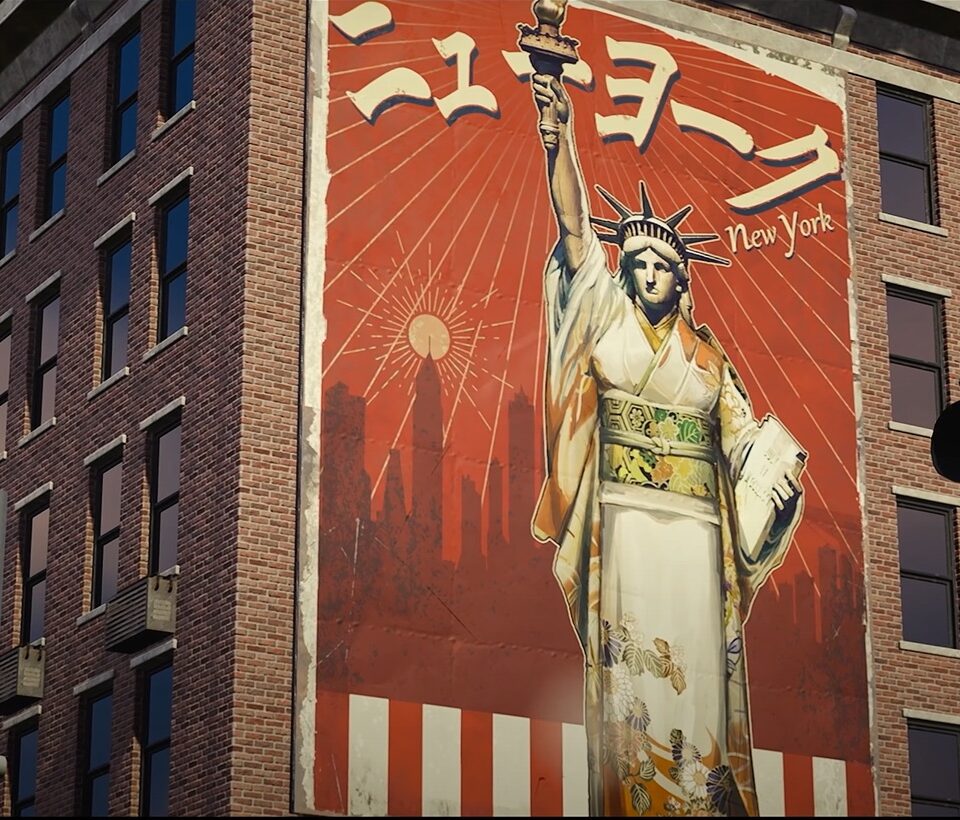
Set in a fictionalized Showa 66 where Japanese economic influence and immigration transformed the United States, Showa American Story takes place across an alternate post-apocalyptic landscape. This article outlines the confirmed world-building, Cataclysm premise, and named locations.
The "Showa America" Alternate History
ConfirmedOfficial materials refer to the setting as Showa America. Anchored in a fictionalized continuation of the Showa era—Showa 66—the premise imagines a United States fundamentally reshaped by Japanese economic expansion and cultural immigration.
In developer interviews, the creators emphasized that the goal is not absurdity for its own sake, but building a cohesive world rooted in believable cultural and everyday details.
The Unknown Cataclysm & Post-Apocalyptic Premise
ConfirmedWhen Choko awakens, society has collapsed following an unknown Cataclysm. Zombies, monsters, and human survivors compete for scarce resources alongside yakuza, bandits, and mysterious organizations. The exact cause of the Cataclysm and a complete faction roster have not been disclosed.
With new companions, Choko travels along America's Route 50 in search of her missing sister Aya, answers behind the tragedy, and vengeance.
Named Locations & Cultural Renaming
ConfirmedAccording to the official story pages, Neo Yokohama—formerly Hollywood—is the city where Choko and her sister first arrived. Official demo guides separately note Mount Neo Yokohama and the Foothill Shopping District.
Earlier 2024 coverage also highlighted the Golden Gate Bridge, Las Vegas, and Neo Tokyo-4 (a reimagined Austin, Texas). These names reflect confirmed narrative settings rather than a claim of full-scale real-world highway traversal or uniform open-world scope across every city.
REFERENCE MATERIAL
Sources
Links below point to public materials cited in this entry. Details may change with future official updates.
Showawiki is an independent resource with no affiliation to NEKCOM GAMES (NEKCOM Entertainment) or its publishers. All entries cite public sources and verification dates.
Read Editorial & Source Policy